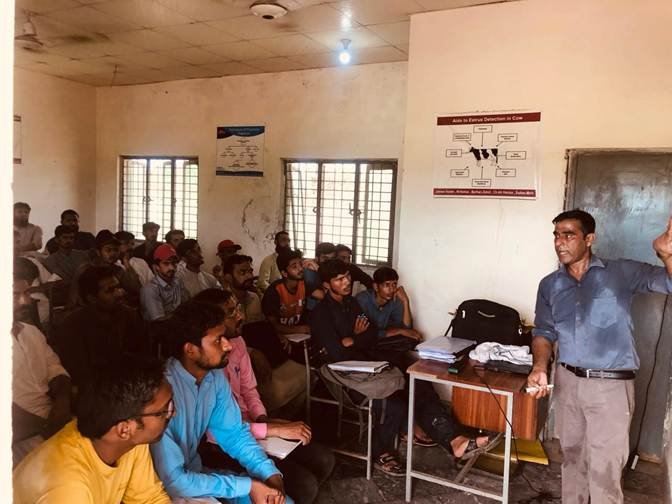
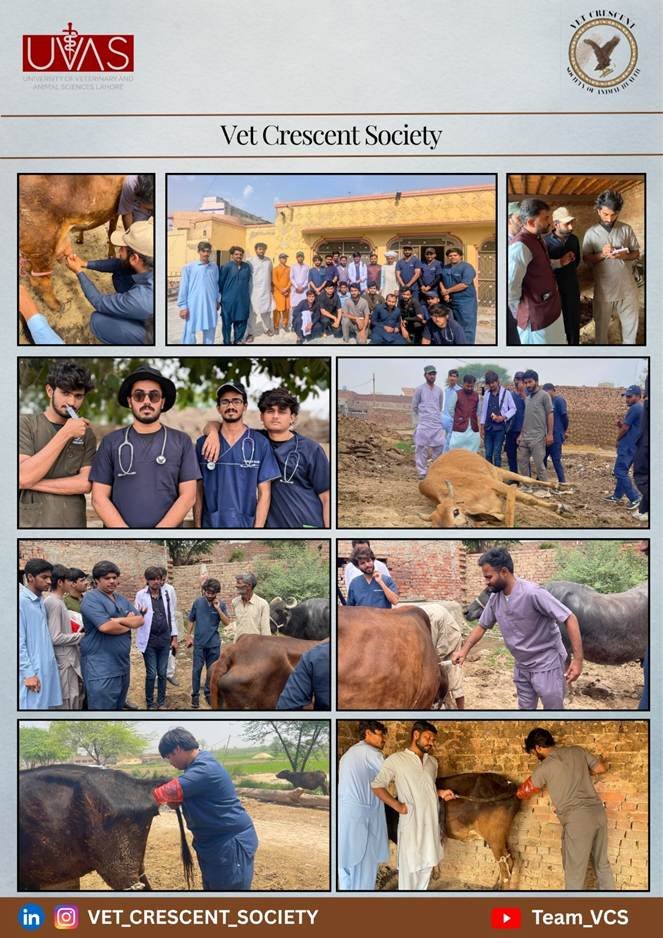
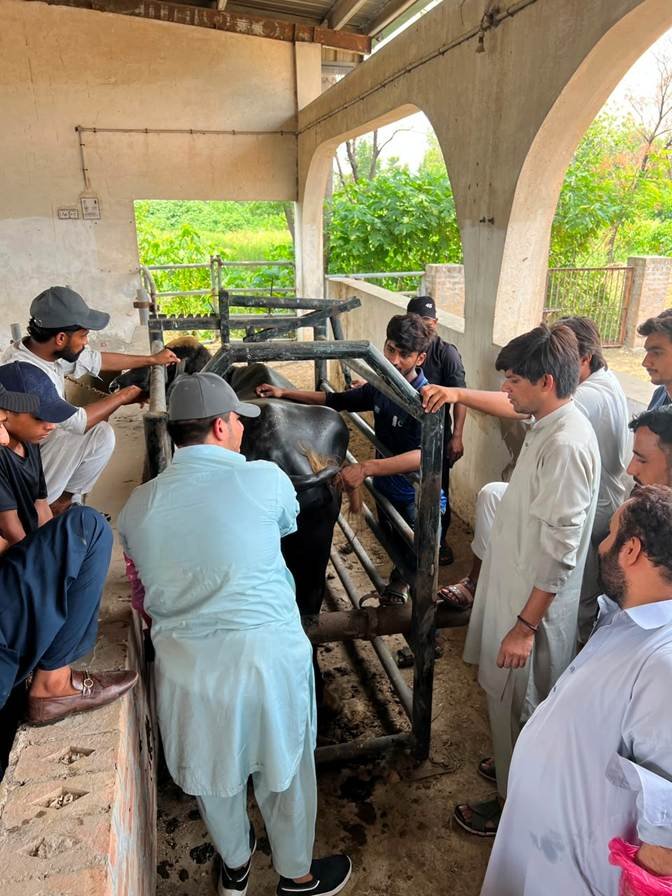
The Institute of Continuing Education and Extension was established in July 2002 under the University of Veterinary and Animal Sciences, Lahore at D-Block Ravi Campus Pattoki. The institute envisages expansion and quality enhancement in its academic courses and extension services to contribute to the national economic growth.
Overview
The Institute of Continuing Education & Extension (ICE&E), University of Veterinary and Animal Sciences (UVAS), Lahore, contributes to sustainable development by delivering practical, employment-oriented training in livestock and allied agricultural sectors. The training projects documented for 2024, 2025 and 2026 cover artificial insemination, veterinary poultry and dairy assistance, dairy farm management, animal disease control, fish farming and livestock management. These programmes support the development of technical skills for the livestock and agriculture workforce and are relevant to Pakistan’s priorities in food security, rural livelihoods, vocational education and productive employment.
Contribution in the context of Pakistan
Pakistan’s livestock and agriculture sectors are important to food supply, rural income and employment. Through skills-based training delivered at ICE&E, UVAS Ravi Campus, Pattoki, and UVAS Lahore, the Institute supports practical capacity-building for people seeking work or improved performance in livestock-related occupations. Training in artificial insemination, dairy farm management, animal disease control, poultry and dairy assistance, fish farming and livestock management can help strengthen on-farm practices, animal health awareness, farm productivity and the availability of skilled personnel. These activities are relevant to national efforts to improve agricultural productivity, strengthen technical and vocational education, support rural communities and promote more resilient food systems.
Alignment with the United Nations Sustainable Development Goals
- SDG 2 — Zero Hunger: Training in livestock management, artificial insemination, dairy farm management, poultry and dairy assistance, and fish farming builds practical capacity relevant to animal production, food availability and more productive food systems.
- SDG 4 — Quality Education: Short, occupation-focused training courses provide technical and vocational learning in livestock and allied agricultural trades, complementing formal university education with applied skills.
- SDG 8 — Decent Work and Economic Growth: Market-relevant skills can improve participants’ readiness for employment, self-employment and small-business activity in livestock, dairy, poultry and aquaculture value chains.
- SDG 9 — Industry, Innovation and Infrastructure: Artificial insemination, farm management and disease-control training promote the application of improved technical practices and knowledge in agricultural production systems.
- SDG 12 — Responsible Consumption and Production: Training in farm and livestock management can support better resource use and production practices. Specific environmental or waste-reduction outcomes should be reported only where measured.
- SDG 15 — Life on Land: Animal disease-control and livestock-management training are relevant to animal health and responsible management of terrestrial production systems. This is a supporting connection rather than evidence of a direct biodiversity outcome.
- SDG 17 — Partnerships for the Goals: The supplied project record identifies NAVTTC as the funding agency for the listed training batches, demonstrating collaboration between UVAS/ICE&E and a national skills-development partner.
Documented ICE&E training activities
According to the project summary provided for this brief, the documented programmes include the following:
- NAVTTC Batch 1 — starting 26 February 2024. Artificial Insemination and Veterinary Poultry and Dairy Assistant training at ICE&E, UVAS Ravi Campus, Pattoki, and UVAS Lahore.
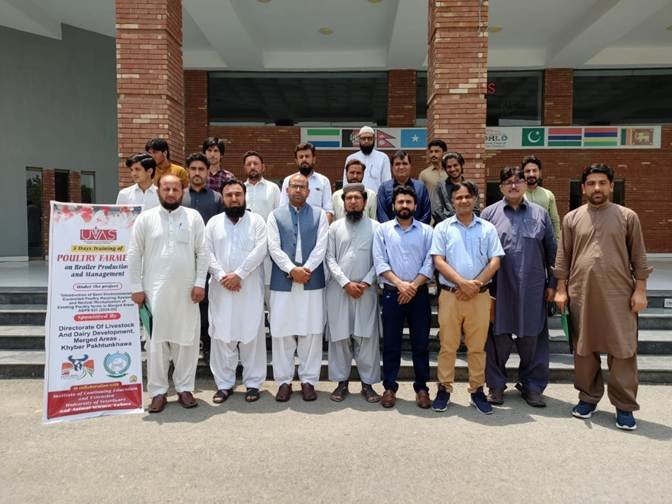
- Prime Minister’s Special Initiative for Agriculture — starting 10 March 2025. Artificial Insemination, Dairy Farm Manager, Animal Disease Control and Fish Farming training delivered at UVAS Lahore and ICE&E, Ravi Campus, Pattoki.
- NAVTTC training batches — starting 14 February 2026. Livestock Manager and Artificial Insemination training at ICE&E, Ravi Campus, Pattoki; Artificial Insemination and Dairy Farm Manager/Dairy Business training at UVAS Lahore; and Veterinary Poultry and Dairy Assistant training at the ART Center, Lahore.
International relevance
The SDGs provide a shared international framework for connecting local educational and skills-development activities with global priorities. ICE&E’s documented training portfolio is most directly relevant to SDGs 2, 4 and 8, with additional links to SDGs 9, 12, 15 and 17. The contribution is primarily through education, workforce skills and capacity-building. For international ranking submissions, these links should be presented as alignment and contribution, not as proof that the programmes alone achieved national or global SDG targets.
Evidence and indicators recommended for ranking submission
- Number of trainees enrolled, completing training and receiving certificates, disaggregated by course, year, gender and location where records permit.
- Course duration, curriculum or competency standards, training venue and funding source.
- Employment, self-employment or income outcomes after training, where follow-up data are available.
- Evidence of improved farm practices, disease-control awareness or productivity, where measured through a tracer study or evaluation.
- Copies of approved project records, NAVTTC agreements, completion reports, attendance records and certificates to substantiate the reported activities.
Source note: This brief is based on the ICE&E training-project summary supplied for preparation. It describes the documented programmes and their plausible SDG alignment. No unprovided trainee outcomes, impact measurements or international partnerships have been assumed.
Objectives
- To impart technical training at professional and sub-professional level
- To develop human resource for socio-economic uplift
- To offer Livestock Assistant Diploma to Matric pass youth
- To offer short refresher courses for professionals to update their knowledge and skills
- To provide extension services to the farmers at their doorstep
- To provide conducive environment to students, trainees and teachers
LIVESTOCK Assistant Diploma
To achieve these goals, the institute is offering Livestock Assistant diploma. Keeping in view the Four-tier service structure and demand of all public and private stakeholders of Livestock the Livestock Assistant diploma is fulfilling the needs of para-veterinary services in all over the Punjab. The Livestock Assistant Diploma holders having quality education, better understanding, knowledge and modern skills are able to deliver better field services resulting in enhancement of animal productivity.
Admission Criteria
- Matriculation (Science with biology)/equivalent
- Minimum 45% Marks
- Maximum age 22 years
Potential Careers Opportunities
- Veterinary Assistant in Livestock and Dairy Development Department
- Animal Laboratory Assistant
- Animal Research Assistant
- Dairy Industry
- Animal Feed Industry
- Private Livestock farms
- Animal products marketing and sale
Training Courses
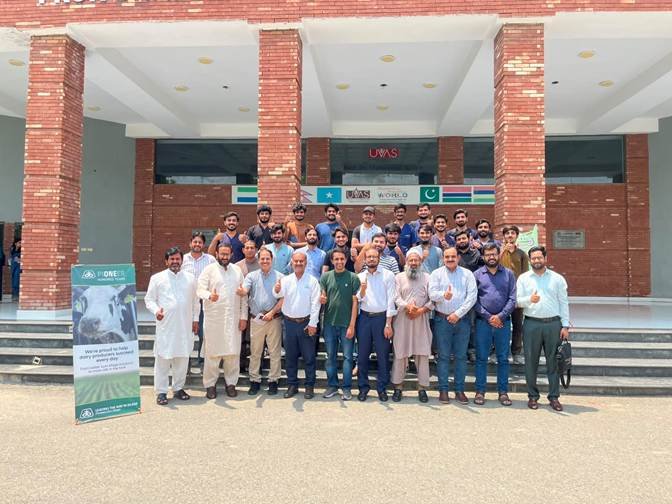
For matriculate youth/farmers, the Institute is also offering certificate courses and vocational educational programs in livestock, poultry, dairy, fisheries, wildlife, etc. This institute has so far trained thousands of farmers, paravets and veterinarians in different disciplines of livestock production and management. The major beneficiary organizations for training programs up till now are;
- Livestock & Dairy Development Department of Punjab
- National Rural Support Program (NRSP)
- Punjab Rural Support Program (PRSP)
- National Vocational Technical Training Commission (NAVTTC)
- Doaba Foundation
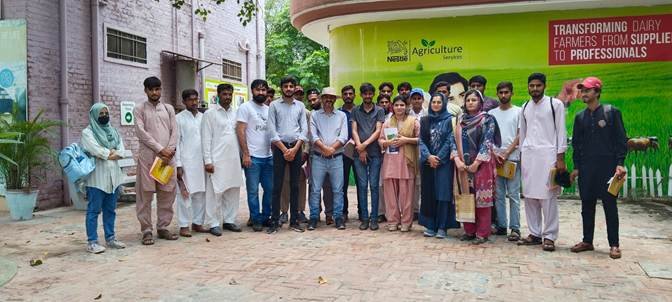
- Nestle Pakistan
- United Nations Development Program (UNDP)
- ASLP
- Tetra Pak
Following certificate training courses are offered with collaboration of different NGOs;
- Village Veterinary Workers (Duration 3 months)
- Artificial Insemination Technician (Duration 6 months)
- Dairy Herd Management (Duration 3 months)
- Community Livestock Extension Workers (Duration 1 month)
- Veterinary Poultry and Dairy Assistant (Duration 6 months)
- Fish Farming (Duration 6 months)
CARRIER OPPORTUNITIES FOR TRAINEES
- Technical staff at livestock farms
- Self-employment
- Vaccinator
- AI technicians
Facilities
- Lecture rooms
- Well-equipped lab
- Internet facility
- IT lab
- Library
- Hostels
- Cafeteria
- Experimental Animal Shed
- Outdoor Clinic
- Playgrounds
- Security
Extension Activities
- Farmer awareness campaigns
- Deworming and vaccination campaigns
- Participation in animal fairs
Other Activities
- Admission and examination of Livestock Assistant Diploma at sub campuses and affiliated institutes
- Internship program
- Co-curricular activities
- Publication of news bulletin and UVAS Gazette
- Preparation of Pamphlets and Brochures
- Books for LAD
- Course Material for other courses
Sub Campuses of UVAS
Following sub campuses of UVAS are also offering Livestock Assistant Diploma
- College of Veterinary and Animal Sciences, Jhang
- Khan Bahadar Choudhry Mushtaq Ahmed College of Veterinary and Animal Sciences, Narowal
- Para-Veterinary Institute Karor Lal-Eason, Layyah
Affiliated Institutions
Following Livestock training center/Para-Vet schools affiliated with UVAS (Institute of Continuing Education and Extension) are also offering Livestock Assistant Diploma
- LSTC, Bahadarnagar, Okara
- LSTC, Shaikhupura
- Govt. Para-Veterinary school, Kherimurat, Attock
- Govt. Para-Veterinary school, Rakh Ghulaman, Bhakkar
- Govt. Para-Veterinary School, Haroonabad, Bahawalnagar
- Govt. Para-veterinary school, Fazilpur, Rajanpur
FAQs:
- What is an admission criterion for Livestock Assistant Diploma?
Answer: Matriculation (Science with biology) with minimum 45% Marks and Age not more than 22 years
- When admission for Livestock Assistant Diploma will open?
Answer: Annually in August/September
|